What Does KYT Mean in Crypto and Blockchain?
KYT crypto meaning refers to the continuous monitoring of blockchain transactions to assess the risk profile of funds. When you receive USDT, TRX, BTC, or ETH, the coins carry a transaction history embedded in the blockchain. KYT systems analyze this history to flag whether the funds originated from legitimate sources or have been linked to mixers, darknet markets, scams, or sanctioned entities. The process is automated: blockchain transaction monitoring tools scan addresses, trace fund flows, and assign risk scores. This differs from a one-time identity check; KYT is ongoing surveillance of the asset itself. Exchanges and payment processors use KYT to comply with anti-money laundering (AML) regulations and to prevent frozen USDT or blocked deposits.
How Does KYT Blockchain Transaction Monitoring Work?
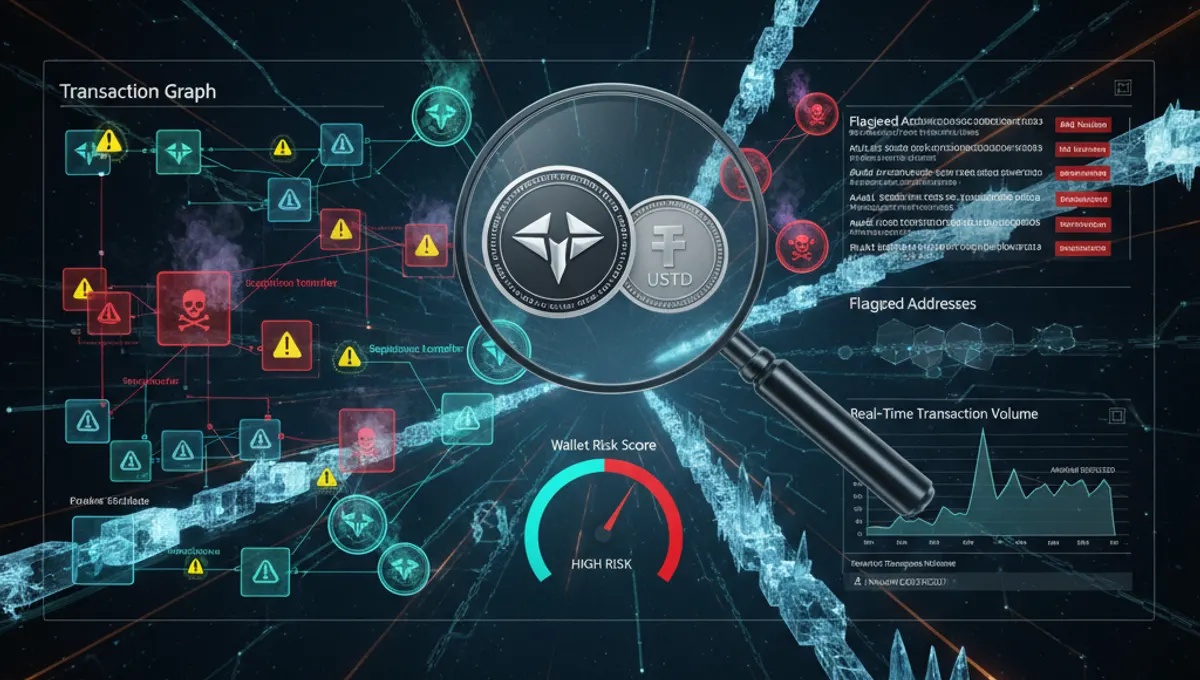
Blockchain transaction monitoring operates by linking on-chain activity to known risk categories. When you submit a wallet address for screening, the KYT system traces all inbound and outbound transactions, building a transaction graph. It cross-references addresses against databases of known darknet markets, theft incidents, gambling platforms, and sanctioned entities. The system then assigns a risk score based on the proximity and frequency of connections to these categories. For example, if your USDT address received funds from an address flagged as a mixer, your risk score increases. KYT meaning in this context is practical: it answers whether your coins are clean or dirty. The monitoring is transparent to the blockchain; all data is public. The analysis speed depends on the service, but most provide results within seconds to minutes.
KYT Crypto Risk Scoring: What Do Risk Levels Mean?
Risk scores in KYT crypto screening typically range from 0 to 100 or are labeled as Low, Medium, High, and Critical. A score near 0 or Low means the address has minimal exposure to suspicious activity; funds are likely clean and safe to receive. Medium risk indicates some exposure to risky addresses or categories but not direct involvement; many exchanges accept Medium-risk deposits with additional scrutiny. High risk means the address has direct or recent connections to mixers, darknet markets, or other suspicious sources; many exchanges will freeze accounts or require investigation. Critical risk flags indicate direct theft, sanctions violations, or active darknet involvement; deposits are typically blocked immediately. The acceptable threshold varies by exchange and jurisdiction, but most institutional services reject Critical and many reject High-risk deposits without review. Checking your risk score before receiving large amounts of USDT or TRX helps you avoid frozen funds.
How to Check a Blockchain Address for KYT Risk Before Receiving Crypto
Step 1: Obtain the wallet address you plan to receive funds into. Copy the full address (TRX, USDT, BTC, or ETH). Step 2: Visit a trusted KYT blockchain transaction monitoring service. Tronrscan.org and similar platforms offer address screening; you can also check our curated list of verified AML services on this site for trusted options. Step 3: Paste the address into the search field and select the blockchain network (Tron, Ethereum, Bitcoin, etc.). Step 4: Review the risk score and transaction history. Look for flags such as mixer exposure, darknet connections, or theft incidents. Step 5: If the risk score is acceptable (typically Low or Medium), proceed with receiving funds. If High or Critical, investigate further or request funds from a different source. This pre-screening takes under a minute and prevents receiving tainted coins that could trigger account freezes.
What Happens If Your Crypto Address Is Flagged as High Risk?
If your address receives a High or Critical KYT risk flag, several outcomes are possible. First, deposits to exchanges may be blocked or delayed pending manual review. Second, your exchange account may be frozen temporarily while compliance teams investigate the source of funds. Third, you may be asked to provide proof of the legitimate origin of the coins (e.g., purchase receipts, mining records). Fourth, in cases of confirmed theft or sanctions violations, the funds may be permanently frozen or seized. The key is transparency: if you received funds unknowingly from a compromised source, most exchanges will work with you to resolve it. However, if you knowingly received stolen or sanctioned funds, legal consequences may follow. To avoid this scenario, screen addresses before receiving large transfers and use blockchain transaction monitoring as a preventive tool. If flagged, contact the exchange immediately with documentation of the legitimate source.
KYT vs. KYC: Understanding the Difference in Crypto Compliance
KYT crypto and KYC (Know Your Customer) are complementary but distinct compliance measures. KYC verifies your identity: name, address, government ID, and source of funds. It is a one-time process performed when you open an exchange account. KYT, by contrast, monitors the transaction history of the assets themselves on an ongoing basis. You can pass KYC (be a verified user) but still receive flagged coins, triggering a frozen USDT deposit. Conversely, an unverified wallet can hold clean coins with no risk. In practice, exchanges require both: KYC to know who you are, and KYT screening to know if your funds are clean. For compliance officers and AML teams, KYT is the blockchain transaction monitoring layer that detects money laundering patterns, while KYC is the identity verification layer. Together, they form a complete AML framework.
Common Risk Flags in KYT Blockchain Screening
KYT systems flag several categories of suspicious activity. Mixer exposure: funds passed through a coin mixer or tumbler, which obscures the transaction trail. Darknet connections: addresses linked to darknet markets or illegal services. Theft: coins identified as stolen in known theft incidents. Sanctions: addresses associated with sanctioned entities, countries, or individuals. Gambling: funds from or to gambling platforms (flagged in some jurisdictions). Scam: addresses involved in Ponzi schemes, rug pulls, or fraud. Ransomware: funds received from ransomware payments. Each flag increases the risk score. A single flag may result in Medium risk; multiple flags or direct involvement typically results in High or Critical risk. When you check a blockchain address, the report should list which flags apply. Understanding these categories helps you assess whether the risk is acceptable for your use case and whether to investigate further before accepting the transfer.
Frequently asked questions
What does KYT mean in crypto?
KYT stands for Know Your Transaction, a compliance process that monitors blockchain transactions to identify risk flags and tainted coins. It analyzes the transaction history of cryptocurrency addresses to detect exposure to mixers, darknet markets, theft, sanctions, and other suspicious activity. KYT is used by exchanges and custodians to prevent frozen USDT and blocked deposits.
How is KYT different from KYC?
KYC (Know Your Customer) verifies your identity once when you open an account. KYT (Know Your Transaction) monitors the transaction history of your funds on an ongoing basis. You can pass KYC but still receive flagged coins. Exchanges use both: KYC to verify who you are, and KYT to verify that your funds are clean.
Can I check if a blockchain address is clean before receiving crypto?
Yes. Use a blockchain transaction monitoring service to screen the address before accepting funds. Paste the address, select the network (Tron, Ethereum, Bitcoin, etc.), and review the risk score. Low or Medium risk is generally acceptable; High or Critical risk may trigger account freezes. Check our verified AML services list for trusted screening tools.
What happens if my crypto address gets a high KYT risk score?
A high risk score may result in your exchange deposit being blocked, your account frozen pending review, or a request for proof of legitimate fund origin. If the risk is confirmed (theft, sanctions), funds may be permanently frozen. Contact your exchange immediately with documentation if flagged, and consider receiving funds from a different source in the future.
What are common KYT risk flags?
Common flags include mixer exposure (coin tumbling), darknet connections, theft, sanctions violations, gambling, scams, and ransomware. Each flag increases your risk score. Multiple flags or direct involvement typically results in High or Critical risk. Review the specific flags in your screening report to understand the risk profile.