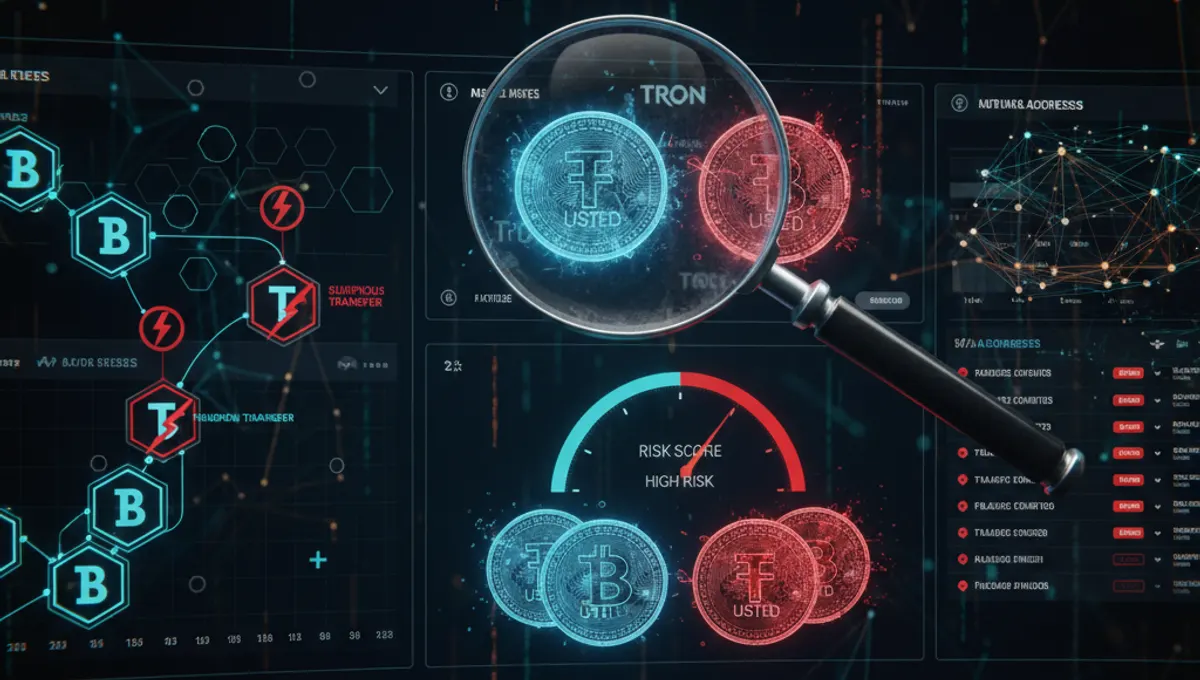
What Is an AML Crypto Check and Why It Matters
An AML (Anti-Money Laundering) crypto check examines a wallet's transaction history and associated entities to flag potential compliance risks. Exchanges, custodians, and institutional buyers now routinely screen addresses before accepting deposits. If a wallet receives coins from a mixer, darknet marketplace, or sanctioned entity, those coins become tainted—and your exchange account may be frozen if you deposit them. A free AML crypto wallet check reveals whether an address has exposure to these risk categories. The check typically returns a risk score, transaction flags, and a summary of suspicious activity. Running this screening before moving funds between wallets or cashing out protects you from sudden account lockdowns and regulatory complications.
How AML Risk Scoring Works
Risk scores in AML crypto checks are calculated by analyzing an address's transaction graph—the chain of inbound and outbound transfers—and cross-referencing it against known high-risk entities and behaviors. Each transaction is weighted based on the counterparty's history. For example, a transfer from a known mixer receives a higher risk weight than a transfer from a regulated exchange. Most AML services assign scores on a scale (e.g., 0–100 or low/medium/high), with thresholds that determine whether funds are considered acceptable for institutional use. A score below 20 is typically safe; 20–50 indicates moderate caution; above 50 flags significant concern. The scoring also accounts for the age of suspicious activity—older transactions may carry less weight than recent ones. Understanding your wallet's score helps you decide whether to move coins or hold them until the risk profile improves.
Step-by-Step: How to Check a Crypto Wallet Address
Follow these steps to perform an AML crypto check on any address:
- Copy the wallet address (TRX, USDT, BTC, ETH, or other blockchain address).
- Visit a trusted AML screening service—check the curated list of verified AML services on this site for reliable options.
- Paste the address into the search field.
- Review the risk score and transaction summary.
- Check for specific flags: mixer exposure, darknet links, scam reports, stolen funds, or sanctions list matches.
- Read the transaction timeline to understand when suspicious activity occurred.
- Decide whether the risk level is acceptable for your use case (personal transfer, exchange deposit, business payment).
Most free AML crypto checks provide basic risk scoring and flag categories. Paid services offer deeper analysis, including entity identification and historical tracking. For a quick assessment, free tools are sufficient; for high-value transfers or compliance requirements, use a verified service from the AML Services page.
Common Risk Flags in AML Crypto Wallet Checks
When you run an AML crypto check, watch for these red flags:
- Mixer exposure: Funds passed through a coin mixer or tumbler, indicating an attempt to obscure the source.
- Darknet marketplace activity: Transfers to or from known darknet markets (e.g., illegal goods, services).
- Scam or theft reports: The address is flagged in fraud databases or linked to known scams.
- Sanctioned entity connection: Funds linked to individuals or organizations on government sanctions lists (OFAC, EU, UN).
- Gambling platform activity: High-volume transfers to gambling sites (regulatory concern in some jurisdictions).
- Ransomware or extortion: Coins received from known ransomware payments or extortion schemes.
- Stolen funds: Coins traced back to exchange hacks or wallet compromises.
A single flag does not automatically make a wallet unusable, but it warrants investigation. Older flags (months or years old) are lower risk than recent ones. If you receive coins flagged for mixer use, the risk depends on whether the mixer activity is recent and the volume involved.
What to Do If Your Coins Are Flagged as Dirty Crypto
If an AML crypto check reveals that your wallet or received funds carry risk flags, take these steps:
- Do not immediately deposit the coins to an exchange—this may trigger an account freeze.
- Review the specific flags and their age. Recent mixer or darknet exposure is higher risk than old activity.
- If the coins came from a known source (e.g., a friend, employer, or service you trust), document this context.
- Consider holding the coins in your personal wallet for a period of time; some risk scores improve as transactions age and the address gains a cleaner history.
- If you must move the coins, use a service that accepts higher-risk addresses, or consult the exchange's compliance team before depositing.
- For business or institutional use, disclose the flags to your compliance officer or legal advisor.
In some cases, coins flagged for mixer use become acceptable after 6–12 months of clean activity. However, if the flags indicate sanctions exposure or active theft, the coins may remain permanently problematic. When in doubt, consult the verified AML services listed on this site for a detailed risk assessment.
How Exchanges Freeze Accounts Over Tainted USDT and Blocked Deposits
Exchanges use AML screening on incoming deposits to comply with financial regulations. If you send USDT or other tokens flagged for high-risk activity, the exchange's automated system may freeze your account or reject the deposit. This happens because exchanges face regulatory penalties if they knowingly accept tainted coins. The freeze can last from hours to permanently, depending on the exchange's policy and the severity of the flags. Your funds may be locked, and you could lose access to your account. In some cases, the exchange requires you to prove the source of the funds or submit additional KYC documentation. To avoid this, always run an AML crypto check free tool before moving significant amounts to an exchange. If your account is frozen, contact the exchange's support team with documentation of the coin source; however, recovery is not guaranteed. Prevention through pre-screening is far more effective than trying to recover frozen funds.
Choosing a Trusted AML Crypto Check Service
Not all AML screening tools are equally reliable. When selecting a service, consider:
- Accuracy: Does the service update its risk databases regularly and cross-reference multiple data sources?
- Coverage: Does it support the blockchains you use (Tron, Ethereum, Bitcoin, etc.)?
- Transparency: Does it explain how risk scores are calculated and which entities or behaviors trigger flags?
- Speed: Can it provide results in seconds or minutes, not hours?
- Free tier availability: Does it offer a free AML crypto check with useful information, or is the free version too limited?
- Compliance credibility: Is the service used by exchanges, custodians, or compliance professionals?
Start with the curated list of verified AML services on this site—these have been selected for reliability and ease of use. Free tools are good for quick checks; paid services provide deeper analysis and historical tracking. For recurring checks or high-value transfers, a subscription to a trusted service is a worthwhile investment.
Frequently asked questions
Is there a free AML crypto check tool I can use right now?
Yes. Several services offer free AML crypto checks with basic risk scoring and flag detection. Visit the verified AML services list on this site to find free tools that support your blockchain (Tron, Ethereum, Bitcoin, etc.). Free checks typically show risk level and major flags; paid services provide deeper analysis.
What does a high risk score mean for my USDT wallet?
A high risk score (typically above 50) indicates your wallet or received coins have exposure to mixers, darknet activity, theft, or sanctions. Deposits to exchanges may be rejected or frozen. Before moving USDT, review the specific flags and consider holding the coins longer to allow the risk profile to improve.
Can I use an AML crypto check on Telegram?
Some AML services offer Telegram bots for quick address screening. Search for verified AML check services that support Telegram integration. However, always verify the bot's legitimacy—use only official links from trusted services listed on this site to avoid scams.
How long does it take for a flagged wallet to become clean?
Risk scores improve over time as an address accumulates clean transactions. Mixer-flagged coins may become acceptable after 6–12 months of no suspicious activity. Sanctions-linked or stolen funds typically remain flagged permanently. Use an AML crypto check periodically to track improvement.
What happens if I deposit tainted coins to an exchange?
The exchange's AML screening may reject the deposit or freeze your account. Exchanges face regulatory penalties for accepting high-risk funds. Recovery of frozen funds is difficult. Always run an AML crypto check before depositing to avoid account lockdowns and compliance issues.