What Is Blockchain Transaction Monitoring?
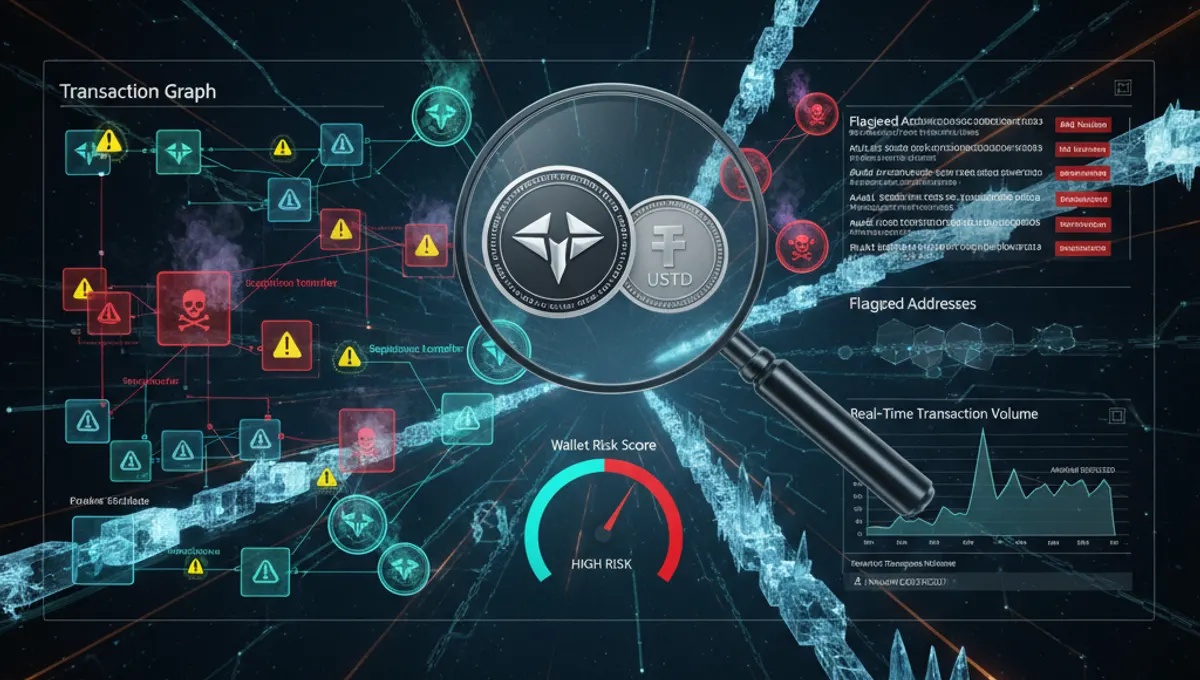
Blockchain transaction monitoring is a real-time screening process that examines wallet addresses and transaction flows to assess compliance risk. Unlike a one-time wallet check, monitoring tracks ongoing activity and flags new risk signals as they emerge. The system compares addresses against known sources of tainted coins: darknet markets, ransomware operations, theft victims, sanctioned entities, and mixing services. Each transaction is scored based on the counterparty's history and the path the funds have traveled on-chain. This continuous cryptocurrency transaction monitoring helps exchanges, custodians, and individuals avoid receiving stolen or frozen assets. The process is automated and runs 24/7 across blockchain networks, making it faster and more thorough than manual review.
How Does AML Transaction Monitoring Rules Work?
AML transaction monitoring rules operate on a risk-scoring framework that evaluates multiple factors. The system assigns points based on: direct exposure to known high-risk wallets, transaction patterns that resemble money laundering (rapid consolidation, frequent mixing), time-to-spend metrics (how quickly funds move after a suspicious event), and geographic or regulatory red flags. Each blockchain transaction tracker free or paid uses similar logic but may weight factors differently. Common rule categories include: detection of funds flowing from darknet marketplaces, identification of mixer usage, flagging of stolen funds reported by victims, and screening against sanctions lists. When a transaction crosses a risk threshold, the system generates an alert. Exchanges and compliance teams then decide whether to freeze the transaction, require additional verification, or block the deposit entirely. The rules are updated regularly as new threat patterns emerge.
Step-by-Step: How to Monitor a Crypto Address Before Receiving Funds
Before accepting USDT, TRX, or any cryptocurrency, follow these steps to screen the sending address:
- Collect the sender's wallet address (e.g., a TRX address starting with T, or an Ethereum address starting with 0x).
- Visit a trusted AML screening service listed on our verified AML Services page.
- Paste the address into the search field and initiate the scan.
- Review the risk score (typically 0–100, where 0 is clean and 100 is highest risk).
- Check the detailed report for specific risk flags: mixer exposure, darknet connections, stolen funds, or sanctions matches.
- Look at the transaction history and counterparty wallets to understand the fund source.
- Decide based on your risk tolerance: accept if score is low, request clarification if moderate, reject if high.
This process takes minutes and prevents you from receiving frozen or tainted coins that exchanges will reject or freeze upon deposit. Many services offer free blockchain transaction tracker capabilities with limited reports; paid plans provide unlimited monitoring and real-time alerts.
Understanding Risk Score Levels and What They Mean
Risk scores translate complex blockchain data into a single number to help you make fast decisions. A score of 0–20 indicates a clean address with no known exposure to high-risk sources; these funds are safe to receive. A score of 21–50 suggests moderate risk: the address may have interacted with mixers or low-tier risk wallets, but no direct theft or sanctions exposure. A score of 51–80 means elevated risk: the address has clear connections to darknet activity, stolen funds, or mixing services; most exchanges will flag or freeze these deposits. A score of 81–100 indicates critical risk: direct exposure to ransomware, theft, or sanctions; exchanges will almost certainly block these funds. Your acceptable threshold depends on your use case. Retail users should aim for scores below 20. Businesses and exchanges typically set thresholds at 30 or lower. Some jurisdictions require stricter limits. Always check the underlying risk factors, not just the score, because context matters: a single mixer interaction may be less concerning than direct theft exposure.
Real Risk Categories: What Flags Your Transactions
Blockchain transaction monitoring flags specific risk categories that indicate tainted or problematic funds:
• Darknet Market Exposure: Funds traced to known dark web marketplaces (e.g., illegal goods, services). • Mixer Usage: Transactions routed through privacy mixers designed to obscure fund origins. • Stolen Funds: Cryptocurrency reported stolen by victims or recovered by law enforcement. • Ransomware: Payments linked to ransomware operations or extortion schemes. • Sanctions: Addresses matching OFAC, EU, or other regulatory sanctions lists. • Gambling: Funds from high-risk gambling platforms (flagged by some jurisdictions). • Scam Proceeds: Cryptocurrency from confirmed Ponzi schemes, rug pulls, or fraud. • Sanctioned Entities: Wallets controlled by individuals or organizations under international sanctions.
Each flag carries different weight. Sanctions exposure is typically treated as a hard stop; mixer exposure alone may be acceptable depending on context. A good cryptocurrency transaction monitoring service will break down which flags apply to your address and explain the confidence level of each detection.
What Happens When Your Coins Are Flagged as Dirty?
If your received cryptocurrency is flagged as tainted or dirty, several outcomes are possible. First, your exchange account may be frozen pending review; you cannot withdraw or trade until compliance clears the funds. Second, the exchange may require you to provide proof of legitimate receipt (e.g., a contract, invoice, or explanation from the sender). Third, the exchange may permanently block the deposit and return it to the sender, or in some cases, forfeit it to regulatory authorities. Fourth, if the funds are linked to a crime, law enforcement may seize them. To avoid this: always screen addresses before accepting large transfers, ask the sender about the fund source if the risk score is elevated, and keep records of legitimate transactions. If your coins are frozen, contact the exchange's compliance team immediately with documentation. Do not attempt to move the funds to another exchange, as this may trigger additional flags and legal complications. Using a trusted blockchain transaction tracker before receiving funds is the most effective prevention.
Choosing a Blockchain Transaction Monitoring Service
Several types of services offer blockchain transaction monitoring. Free blockchain transaction tracker tools provide basic wallet screening but usually limit the number of checks per month and offer minimal detail. Paid services offer unlimited monitoring, real-time alerts, detailed risk reports, and API access for businesses. When evaluating a service, check: accuracy of risk scoring (compare results across multiple services), coverage of blockchain networks (Tron, Ethereum, Bitcoin, etc.), update frequency of threat databases, and compliance with regulatory standards. Our curated AML Services page lists verified providers that meet industry standards for accuracy and reliability. Starting with a trusted service from that list is the safest approach, as these providers maintain up-to-date sanctions lists, darknet databases, and transaction analysis tools. Avoid services that make unrealistic claims or charge suspiciously low fees, as they may use outdated data. For individuals, a free or low-cost service is often sufficient; for businesses and exchanges, a paid subscription with API integration is necessary for continuous transaction monitoring cryptocurrency compliance.
Frequently asked questions
Can I monitor blockchain transactions for free?
Yes. Many services offer free blockchain transaction tracker tools that let you screen a limited number of addresses per month. Free versions typically provide a risk score and basic flags but lack detailed reports and real-time alerts. Paid plans unlock unlimited monitoring, detailed breakdowns, and API access. For occasional checks, free tools are sufficient; for regular or business use, a paid subscription is recommended.
How often should I monitor a crypto address?
Screen an address before you receive funds from it. If you're receiving ongoing payments from the same sender, monitor the address periodically or set up real-time alerts through a paid service. Risk profiles can change if an address later interacts with high-risk sources. For critical transactions, check immediately before accepting; for routine transfers from trusted parties, monthly checks may suffice.
What's the difference between a risk score and a risk flag?
A risk score is a single number (0–100) summarizing overall risk. Risk flags are specific categories of concern (e.g., mixer exposure, sanctions match, stolen funds). A high score indicates multiple flags or severe flags; a low score means few or minor flags. Always review both: a score of 40 with only mixer exposure may be acceptable, while a score of 40 with sanctions exposure is a hard stop.
Will my exchange freeze my account if I receive flagged crypto?
Possibly. If you deposit cryptocurrency flagged as tainted, the exchange may freeze your account pending compliance review. The outcome depends on the severity of the flags, the exchange's policies, and your jurisdiction. Sanctions exposure typically triggers immediate freezing; mixer exposure alone may not. Always screen before depositing to avoid this scenario.
How accurate is blockchain transaction monitoring?
Accuracy varies by service and data source. Established providers maintain high accuracy for sanctions lists and known darknet markets, but detection of stolen funds depends on victim reporting. No system is 100% accurate; false positives and false negatives occur. Cross-check results with multiple services for critical decisions, and always review the underlying risk factors, not just the score.