What Is the Core Difference Between Crypto and Real Money in Compliance
Real money (fiat currency) flows through regulated financial institutions with built-in AML controls: banks verify customer identity upfront, monitor transactions in real time, and report suspicious activity to authorities. Crypto operates on decentralized blockchains where transactions are pseudonymous—addresses are long strings of characters, not linked to names unless voluntarily disclosed. This means a crypto transaction is permanently visible on the ledger, but the sender and receiver identities remain hidden unless traced through exchange records or blockchain analytics. Real money compliance is enforced by law; crypto compliance is voluntary but increasingly required by exchanges and custodians. The result: receiving dirty crypto carries immediate risk (frozen funds, account suspension), while receiving tainted fiat is typically caught and reversed by your bank.
How KYT (Know Your Transaction) Differs from Traditional AML Checks
Traditional AML checks focus on the person: banks verify identity documents, check sanctions lists, and monitor account behavior over time. KYT crypto screening focuses on the transaction itself: blockchain analytics tools trace coin history, flag addresses linked to mixers or darknet markets, and assign risk scores based on transaction patterns. A crypto hot wallet vs cold wallet distinction also matters—hot wallets (connected to the internet) are monitored more closely for suspicious activity, while cold wallets (offline storage) are harder to trace but still flagged if coins move to risky addresses. KYT tools use machine learning to detect anomalies: sudden large transfers, rapid movement through multiple addresses, or deposits from sanctioned entities. Unlike traditional AML, which relies on customer reporting, KYT is automated and continuous, scanning every transaction on the blockchain in real time.
Why Receiving Tainted Crypto Is Riskier Than Receiving Dirty Fiat
When you receive real money from a fraudulent source, your bank typically catches it during settlement and reverses the transaction. When you receive tainted crypto, the transaction is permanent and irreversible. If those coins are flagged as dirty—linked to theft, sanctions, or illegal markets—your exchange account can be frozen without warning. USDT (Tether) on Tron (TRC20) is particularly vulnerable: if frozen USDT is sent to your wallet, you cannot spend it, and exchanges will reject deposits containing those coins. Risk categories include: coins from mixers (privacy tools used to obscure origin), darknet market proceeds, stolen funds, sanctioned entity wallets, and gambling platforms. An aml check crypto before accepting a deposit can reveal these risks. Real money compliance is passive (your bank handles it); crypto compliance is your responsibility. This is why checking a wallet address before receiving funds is critical—there is no reversal mechanism.
How to Check a Crypto Wallet Address Before Receiving Funds
Before accepting any crypto deposit, especially USDT or TRX, run an aml check crypto on the sender's address. Steps:
- Obtain the sender's wallet address (a long string starting with 0x for Ethereum, T for Tron, or 1/3 for Bitcoin).
- Visit a verified AML screening service (check our curated AML Services list for trusted tools).
- Enter the address and run a risk scan.
- Review the risk score: green (low risk, safe to accept), yellow (medium risk, investigate further), red (high risk, do not accept).
- Check the transaction history: look for deposits from known mixers, darknet markets, or sanctioned entities.
- If the address is flagged, ask the sender for an alternative address or decline the transfer. This process takes minutes and prevents frozen USDT or account bans. Many exchanges now require this step before large deposits; doing it yourself first gives you control.
Understanding Risk Scores and What They Mean for Your Wallet
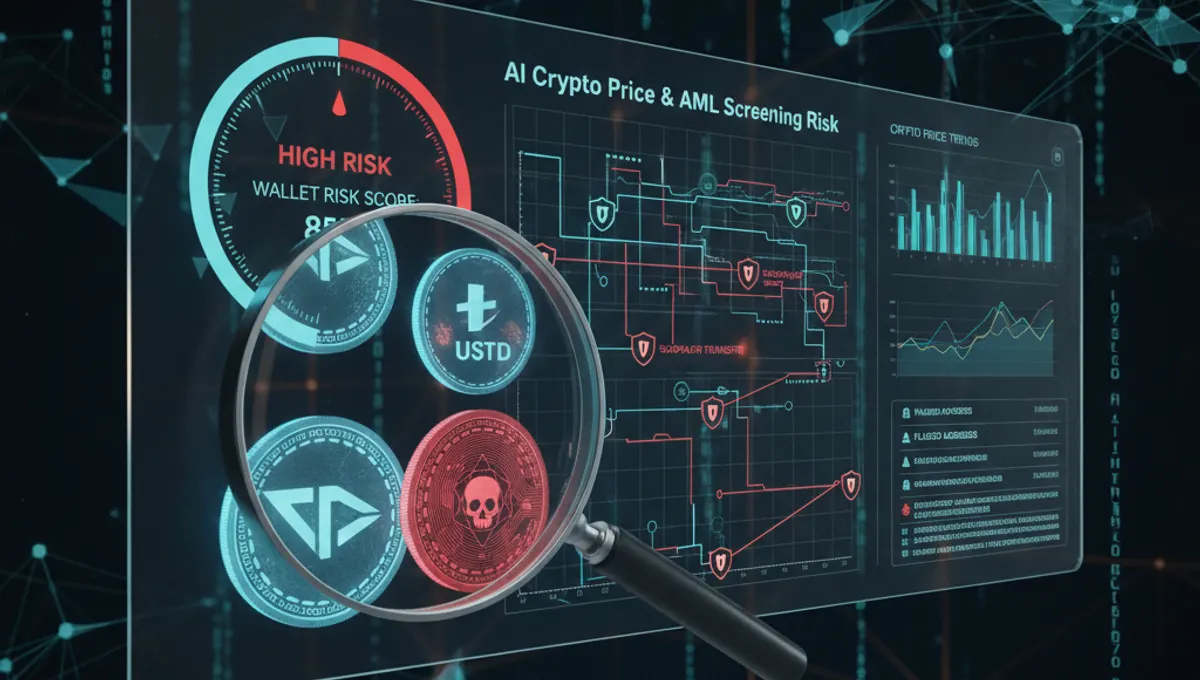
A crypto wallet risk score ranges from 0 (clean, no suspicious history) to 100 (high risk, likely tainted). Scores are calculated by analyzing transaction patterns: frequency of transfers, connections to known risky addresses, time spent in mixers, and proximity to darknet markets. A score of 0–20 is generally safe; 21–50 warrants caution (investigate the source); 51–100 means do not accept (high probability of sanctions, theft, or illegal origin). Real money has no equivalent—your bank simply blocks or reverses suspicious transfers. Crypto risk scores are transparent because the blockchain is public, but they require specialized tools to interpret. An aml check crypto reveals not just the score but the reasoning: which transactions triggered flags, which addresses in the history are risky, and whether the coins passed through mixers. Exchanges typically reject deposits with scores above 50–70, depending on their compliance policy. Understanding your wallet's risk score before sending or receiving crypto is essential for avoiding frozen USDT and account suspension.
What Happens When Crypto Is Flagged as Dirty or Tainted
If your wallet receives dirty crypto, several outcomes are possible. First, the exchange you deposit to may reject the transaction outright, citing AML policy. Second, your account may be frozen pending investigation—you cannot withdraw or trade until compliance clears it. Third, if the coins are linked to sanctions or serious crime, law enforcement may seize them. Unlike real money, there is no reversal: the transaction is permanent on the blockchain. USDT frozen by Tether (the issuer) cannot be spent anywhere; it remains in your wallet but is worthless. To recover, you must prove the source of the coins was legitimate, which is difficult if they passed through mixers or came from an unknown sender. Prevention is far simpler: run an aml check crypto before accepting any large deposit, especially from new counterparties. If you already hold flagged coins, some exchanges offer coin mixing or consolidation services, but these are expensive and may trigger additional scrutiny. The safest approach is to never accept tainted crypto in the first place.
Comparing Crypto Compliance to Real Money Compliance Frameworks
Real money compliance is centralized: governments set rules, banks enforce them, and customers are protected by deposit insurance and reversal rights. Crypto compliance is decentralized and emerging: no single authority controls the blockchain, but exchanges and custodians are increasingly required to implement KYT and AML checks. Real money transactions are private (only your bank sees them); crypto transactions are public (anyone can view them on the blockchain). Real money compliance is reactive (banks catch fraud after the fact); crypto compliance must be proactive (you must screen addresses before transacting). Real money offers legal recourse (sue your bank, file a complaint); crypto offers none (the blockchain is immutable). However, crypto offers transparency: you can verify a transaction's history yourself using blockchain explorers, whereas real money transactions are opaque. For businesses and individuals handling crypto, this means implementing stronger due diligence: use aml check crypto tools, maintain records of all transactions, and screen counterparties before accepting deposits. Our curated AML Services list includes verified tools designed for this purpose.
Frequently asked questions
Can I reverse a crypto transaction if I receive dirty money
No. Crypto transactions are permanent and irreversible once confirmed on the blockchain. Real money can be reversed by your bank, but crypto cannot. This is why screening a wallet address before accepting crypto is critical. If you receive tainted coins, they remain in your wallet and may be rejected by exchanges or frozen by the token issuer.
What is the difference between a hot wallet and cold wallet in AML screening
A hot wallet is connected to the internet and actively used for transactions; it is easier to monitor and flag for suspicious activity. A cold wallet is offline storage and harder to trace, but coins are still flagged if they move to risky addresses. Both require aml check crypto before accepting deposits. Hot wallets pose higher immediate risk; cold wallets offer better security but do not eliminate compliance obligations.
Why do exchanges freeze USDT but not fiat deposits
USDT is frozen by Tether (the issuer) if coins are linked to sanctions or crime; the freeze is permanent and global. Fiat deposits are reversed by your bank if flagged, and you retain access to your account. Crypto has no reversal mechanism, so frozen USDT cannot be recovered. This is why aml check crypto before accepting USDT is essential—once frozen, the coins are worthless.
How does KYT differ from traditional AML in crypto compliance
KYT (Know Your Transaction) analyzes the transaction history on the blockchain; traditional AML analyzes the customer's identity and behavior. KYT is automated and continuous; AML is periodic and manual. KYT flags risky addresses and transaction patterns; AML flags risky customers. Crypto requires both: exchanges verify your identity (AML) and screen incoming coins (KYT). Using aml check crypto tools covers the KYT side of compliance.
What risk score should I accept for a crypto deposit
Scores 0–20 are safe; 21–50 require investigation; 51+ should be rejected. Most exchanges reject deposits above 50–70. Before accepting any deposit, run an aml check crypto and review the risk score and transaction history. If the source is unclear or the score is high, ask the sender for an alternative address or decline. Prevention is cheaper than dealing with frozen funds.