What Is a TRON Address: Format and Structure
A TRON address is a 34-character alphanumeric string beginning with the letter T, derived from the TRON blockchain's cryptographic protocol. Example format: T1234567890ABCDEFGHIJKLMNopqrstuvwxyz. Each address corresponds to a private key that controls the funds; if someone has your private key, they control your address. TRON addresses are case-sensitive and immutable—once created, they cannot be changed. Unlike Bitcoin or Ethereum addresses, which use different prefixes, all TRON addresses start with T, making them instantly recognizable. The address is generated when you create a TRON wallet, whether through a custodial exchange, a hardware wallet, or a self-custody application. Understanding this structure helps you verify you're sending funds to the correct destination and avoid typos that could result in permanent loss.
Why You Need to Check a TRON Address Before Receiving Funds
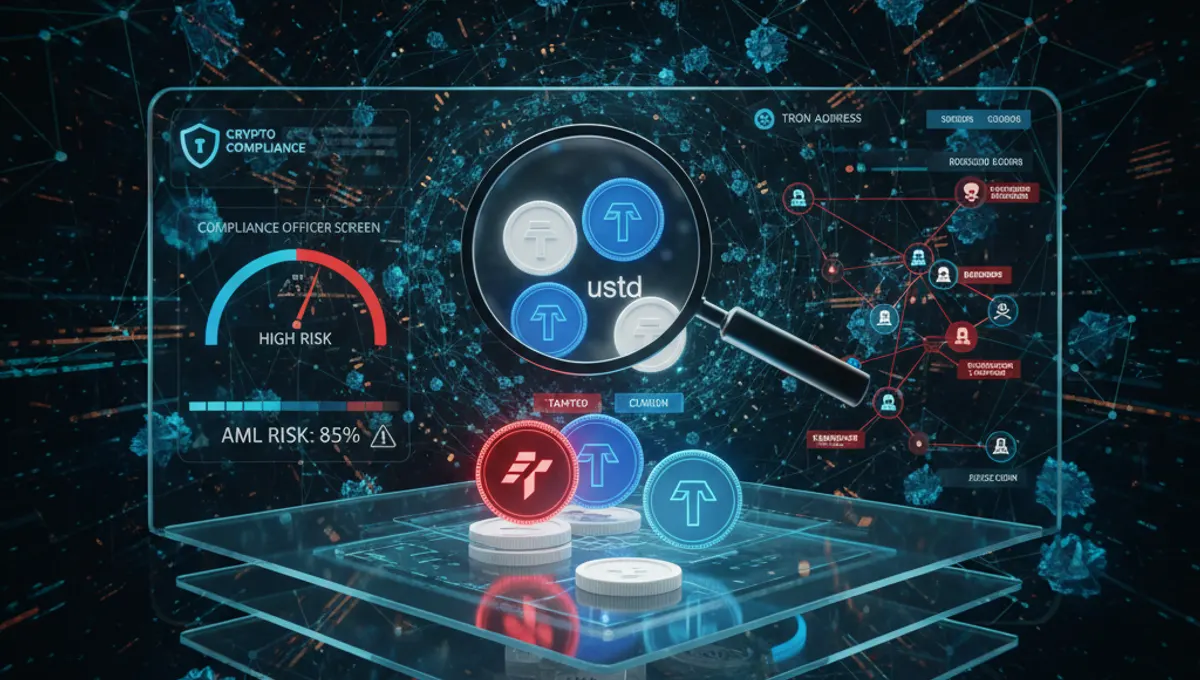
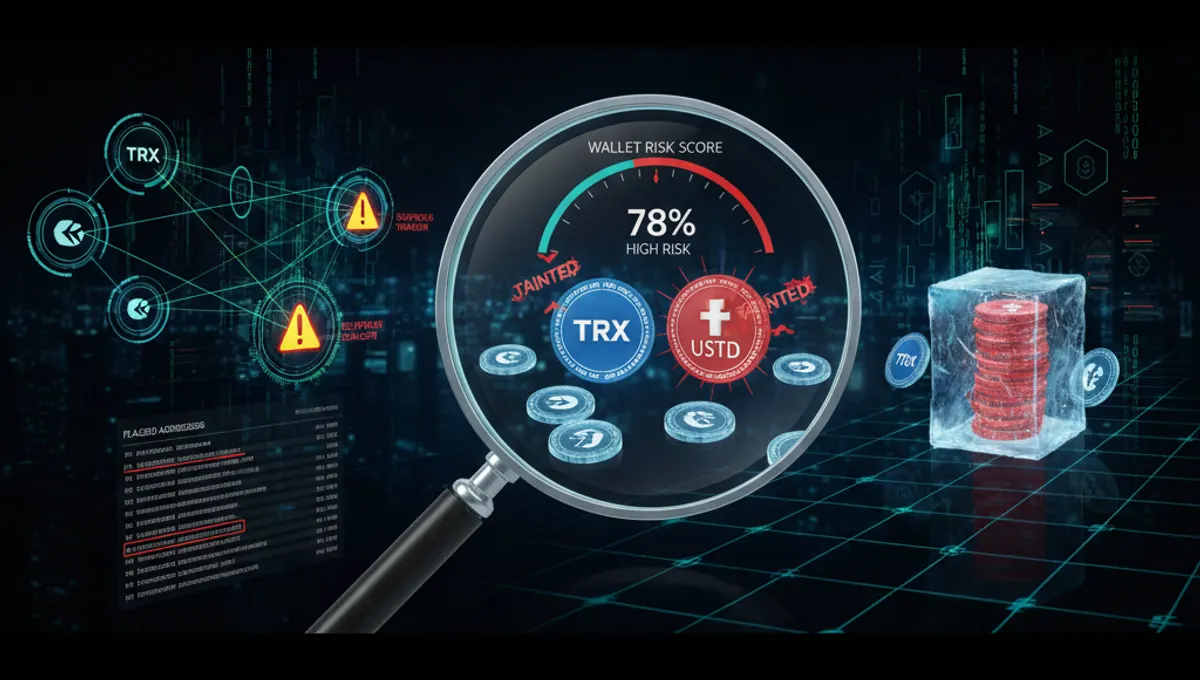
Checking a TRON address for AML risk before accepting a transfer protects you from receiving tainted coins—funds stolen from hacks, proceeds from scams, or output from cryptocurrency mixers used to obscure illicit activity. If you receive USDT or TRX from a flagged address, your exchange account may be frozen during compliance review, and you could face delays or permanent restrictions. Regulatory frameworks like FinCEN guidance and exchange policies require transaction monitoring; exchanges increasingly screen incoming deposits against sanctions lists and known darknet market wallets. A TRON address lookup can reveal whether funds originate from high-risk sources: ransomware payments, gambling platforms, darknet markets, or sanctioned entities. Performing a tron address check before accepting funds is a practical compliance step that prevents costly account lockdowns and protects your reputation.
How to Check a TRON Address: Step-by-Step
To check a TRON address for AML risk, follow these steps:
- Obtain the sender's full TRON address (34 characters starting with T).
- Visit a reputable AML screening service—our curated list of verified AML services on this site includes tools that scan TRON addresses against sanctions lists, darknet databases, and transaction history.
- Paste the address into the checker and run the scan.
- Review the risk score and transaction flags: look for mixer exposure, darknet links, stolen fund markers, and sanctions matches.
- Check the address's transaction history to see where funds originated and how long the address has been active.
- If the risk score is low (green), the address is generally safe to receive from. If medium or high (yellow or red), investigate further or decline the transfer.
- Document the check result for your compliance records.
This tron address check takes minutes and provides concrete evidence that you performed due diligence before accepting funds.
Understanding TRON Address Risk Scores and Flags
An AML risk score for a TRON address reflects the likelihood that the address or its transaction history is connected to illicit activity. Risk scores typically range from 0–100 or are labeled as low, medium, or high. A low risk score (0–30) indicates the address has minimal exposure to known darknet markets, mixers, or sanctions lists. A medium score (31–70) suggests some transaction history with higher-risk entities or unconfirmed links to suspicious activity. A high score (71–100) indicates direct or strong indirect connections to ransomware, stolen funds, gambling platforms, or sanctioned entities.
Common flags include: - Mixer exposure: funds passed through privacy-mixing services - Darknet links: transaction history involving known darknet marketplace wallets - Stolen funds: address received output from confirmed theft or hack - Sanctions match: address appears on OFAC or similar regulatory lists - Gambling exposure: funds linked to casino or betting platforms
Acceptable thresholds vary by jurisdiction and business model; most exchanges accept addresses with risk scores below 30 without manual review.
TRON Address Lookup: What Transaction History Reveals
A TRON address lookup shows the complete on-chain transaction history: every incoming and outgoing transfer, timestamps, amounts, and linked addresses. This transparency is a feature of blockchain technology—all TRON transactions are public and immutable. By reviewing transaction history, you can trace where funds originated, how many hops they've taken through different wallets, and whether the address has received output from known high-risk sources.
For example, if an address received USDT from a mixer, the transaction history will show the mixer's wallet address and timestamp. If funds came from a confirmed ransomware payment address, that link appears in the chain. Long-established addresses with consistent, legitimate transaction patterns (e.g., regular deposits from a known exchange) typically carry lower risk than newly created addresses with sporadic activity or sudden large transfers from unknown sources.
Transaction history also reveals whether an address has been flagged or frozen by exchanges, indicated by sudden cessation of activity or public warnings. This information is invaluable for assessing whether receiving funds from that address could trigger compliance holds on your own account.
Common TRON Address Risk Categories and What They Mean
Understanding risk categories helps you interpret AML check results:
- Ransomware: Address received payments from confirmed ransomware attacks; extremely high risk.
- Stolen funds: Address holds cryptocurrency confirmed as output from theft, hacking, or fraud; high risk.
- Darknet markets: Address is associated with known darknet marketplace operations or has received funds from them; high risk.
- Mixers and tumblers: Address has received output from privacy-mixing services designed to obscure transaction origins; medium to high risk depending on context.
- Gambling platforms: Address linked to online casinos or betting services; medium risk (jurisdiction-dependent).
- Scam proceeds: Address received funds from confirmed Ponzi schemes, rug pulls, or investment fraud; high risk.
- Sanctioned entities: Address appears on OFAC SDN list or equivalent regulatory sanctions list; extreme risk and may be illegal to transact with.
- Unconfirmed risk: Address shows patterns consistent with high-risk behavior but lacks definitive proof; low to medium risk.
Each category carries different compliance implications; sanctioned addresses are typically non-negotiable, while gambling exposure may be acceptable depending on your jurisdiction and business policy.
How to Avoid Receiving Tainted TRON Coins and Frozen Deposits
To protect yourself from frozen USDT and blocked deposits, adopt these practices:
- Always perform a tron address checker scan before accepting large transfers or transfers from unfamiliar sources.
- Request sender information: ask the counterparty where the funds originated and why they're sending them.
- Use verified AML services listed on our curated AML Services page to screen addresses consistently.
- Set a risk threshold for your business: decide whether you'll accept medium-risk addresses and document that policy.
- Keep records of all address checks and results for audit trails and regulatory compliance.
- If you receive funds from a flagged address, report the transaction to your exchange and cooperate with compliance review.
- Never attempt to obscure the origin of funds or use mixers to hide transaction history; this amplifies compliance risk.
- Monitor your exchange account for holds or warnings; respond promptly to compliance inquiries.
These steps significantly reduce the likelihood of account freezes and ensure you maintain a clean transaction history. Exchanges increasingly penalize customers who repeatedly receive tainted coins, even if unintentionally.
Frequently asked questions
How do I know if a TRON address is safe to receive from?
Run the address through an AML checker to get a risk score and transaction flags. Check for mixer exposure, darknet links, stolen funds, and sanctions matches. A low risk score (0–30) is generally safe. Review the transaction history to see where funds originated. If you're unsure, ask the sender for details about the funds' origin and consult our verified AML services list.
What does a high risk score on a TRON address mean?
A high risk score (71–100) indicates the address or its transaction history is connected to ransomware, stolen funds, darknet markets, or sanctioned entities. Receiving funds from a high-risk address can trigger exchange account freezes, compliance holds, and potential regulatory scrutiny. Decline transfers from addresses with high risk scores unless you have explicit compliance approval.
Can I check a TRON address for free?
Some AML services offer limited free TRON address checks, though results may be less detailed than paid scans. Our curated AML Services page lists verified providers with free and paid tiers. Free checks typically show basic risk scores; paid services provide deeper transaction history, sanctions screening, and detailed flag explanations. For regular compliance work, a paid subscription is more reliable.
What happens if I receive USDT from a frozen TRON address?
If you receive USDT from a frozen address, your exchange may flag the deposit during compliance review, leading to temporary or permanent account restrictions. The exchange may require you to explain the source of funds or freeze your account pending investigation. Always check the sender's address before accepting transfers to avoid this scenario.
How often should I check TRON addresses for AML risk?
Check every address before accepting transfers, especially from unfamiliar sources or large amounts. If you receive regular transfers from the same address, perform an initial check and then periodic rescans (monthly or quarterly) to catch changes in risk status. Consistent screening is a best practice for compliance and protects your account from frozen deposits.