What Does Checking Crypto Wallet Balance Mean?
Checking your crypto wallet balance means viewing the total amount of cryptocurrency held at a specific blockchain address. On public blockchains like Tron, Ethereum, and Bitcoin, every address and transaction is visible on a block explorer. You can look up any address and see its current holdings, transaction history, and movement patterns. However, balance alone does not tell you whether those coins are clean or tainted. An address might hold significant USDT or TRX, but if those funds came from a mixer, ransomware operation, or sanctioned entity, exchanges will flag or freeze them. That is why checking balance and running an AML crypto wallet check together is essential for compliance and risk management.
How to Check Your Wallet Balance on a Block Explorer
To check your wallet balance, use a public block explorer for the blockchain your address is on:
- Go to the official block explorer (e.g., Tronscan for Tron, Etherscan for Ethereum, Blockchain.com for Bitcoin).
- Paste your wallet address into the search bar.
- View your total balance, token holdings, and recent transactions.
- Review the transaction list to understand where funds came from and where they went.
This method is free and instant. You will see your exact balance in the native token (TRX, ETH, BTC) and any ERC-20 or TRC-20 tokens you hold. However, a block explorer does not assess whether your coins are flagged by compliance systems. For that, you need an AML check crypto wallet service.
Why You Need an AML Check Alongside Balance Verification
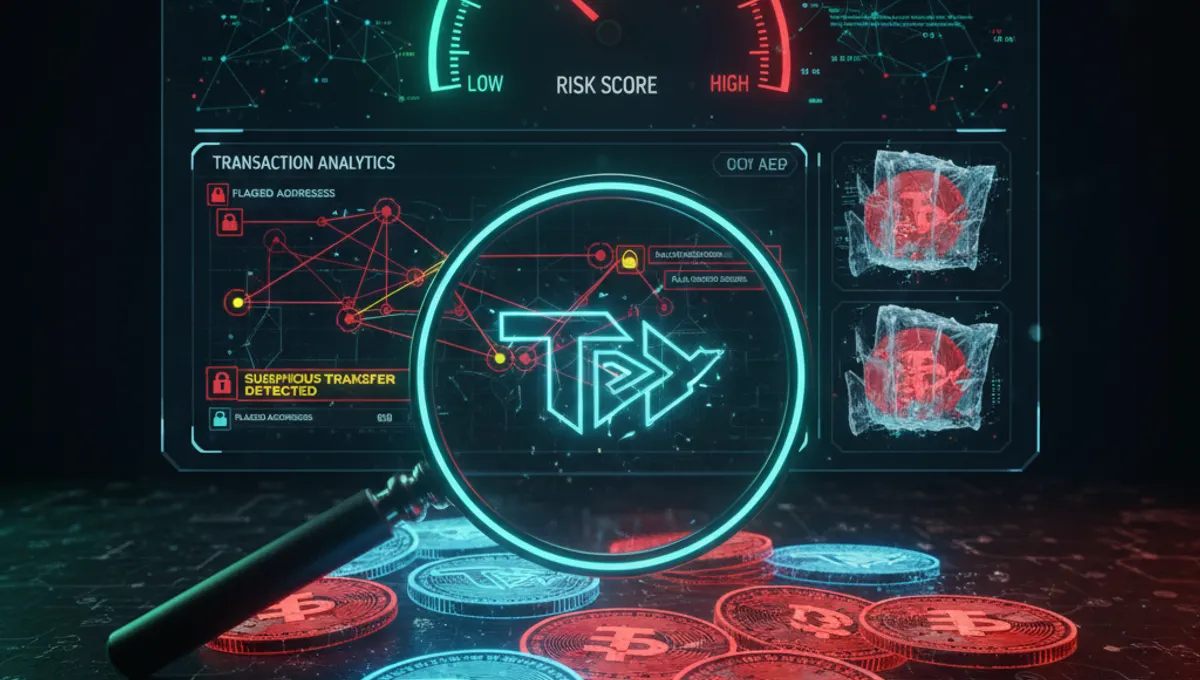
A balance check shows you what you own; an AML crypto wallet check shows you whether those coins are safe to hold or trade. Exchanges, payment processors, and financial institutions use AML screening to detect coins linked to:
- Cryptocurrency mixers and tumblers
- Darknet market transactions
- Ransomware and theft proceeds
- Sanctioned entities and jurisdictions
- Gambling and fraud operations
- Stolen private keys and compromised wallets
If your wallet receives coins flagged in any of these categories, your exchange account may be frozen, deposits rejected, or withdrawals blocked. Running an AML crypto wallet check before accepting large transfers lets you avoid these problems entirely.
How to Run an AML Check on Your Wallet Address
To perform an AML crypto wallet check, use a dedicated screening service:
- Copy your wallet address.
- Visit a verified AML screening platform (our curated list of AML services on this site includes trusted providers).
- Paste your address and select the blockchain (Tron, Ethereum, Bitcoin, etc.).
- Review your risk score and any flagged transactions.
- Check the detailed report for specific risk categories (mixer exposure, sanctions, darknet links, etc.).
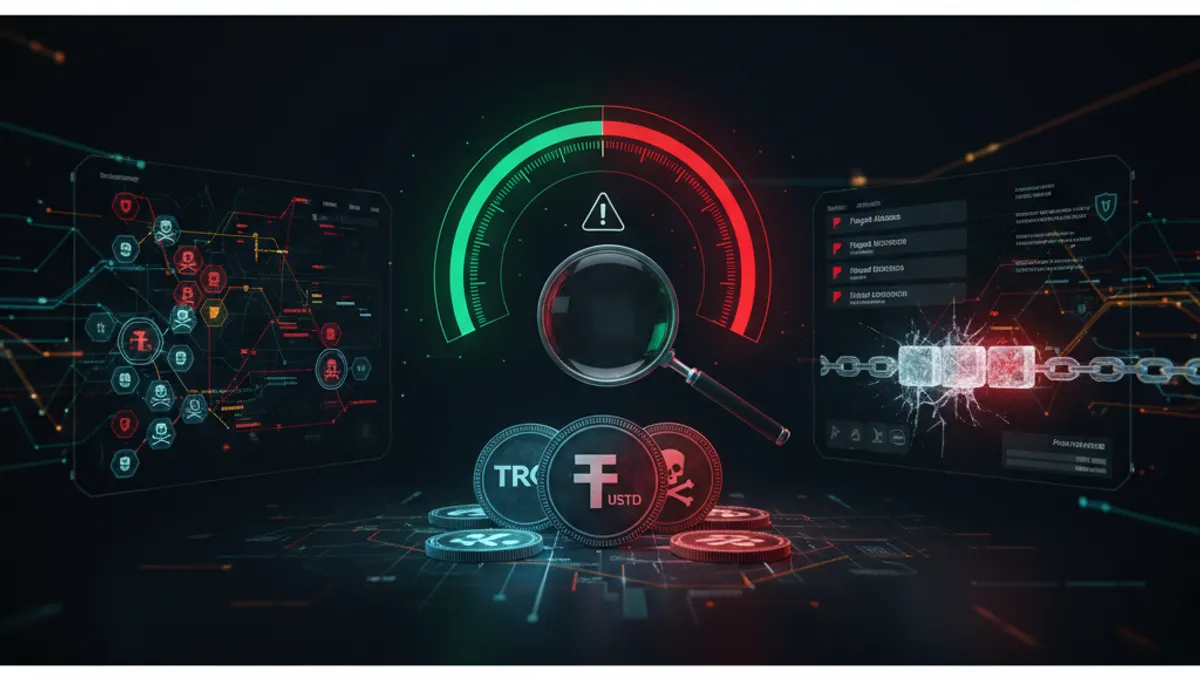
Most services return a risk score (low, medium, high) and a breakdown of flagged activity. Some offer free basic checks; others charge per scan. For ongoing wallet monitoring or high-volume screening, compare options on our AML Services page to find the right fit for your needs.
Understanding Risk Scores and What They Mean
AML screening services assign risk scores based on transaction history and blockchain analytics:
- Low Risk (0–20%): Address shows normal activity, no mixer or darknet exposure, no sanctions flags.
- Medium Risk (21–50%): Address has minor exposure to high-risk services or unconfirmed suspicious patterns.
- High Risk (51–100%): Address is directly linked to mixers, darknet markets, stolen funds, or sanctioned entities.
Exchanges typically accept low-risk addresses without friction. Medium-risk addresses may trigger additional verification or monitoring. High-risk addresses are often blocked outright. Before receiving USDT or TRX from an unknown source, ask the sender to run an AML check on their address. If their score is high, decline the transfer or investigate further.
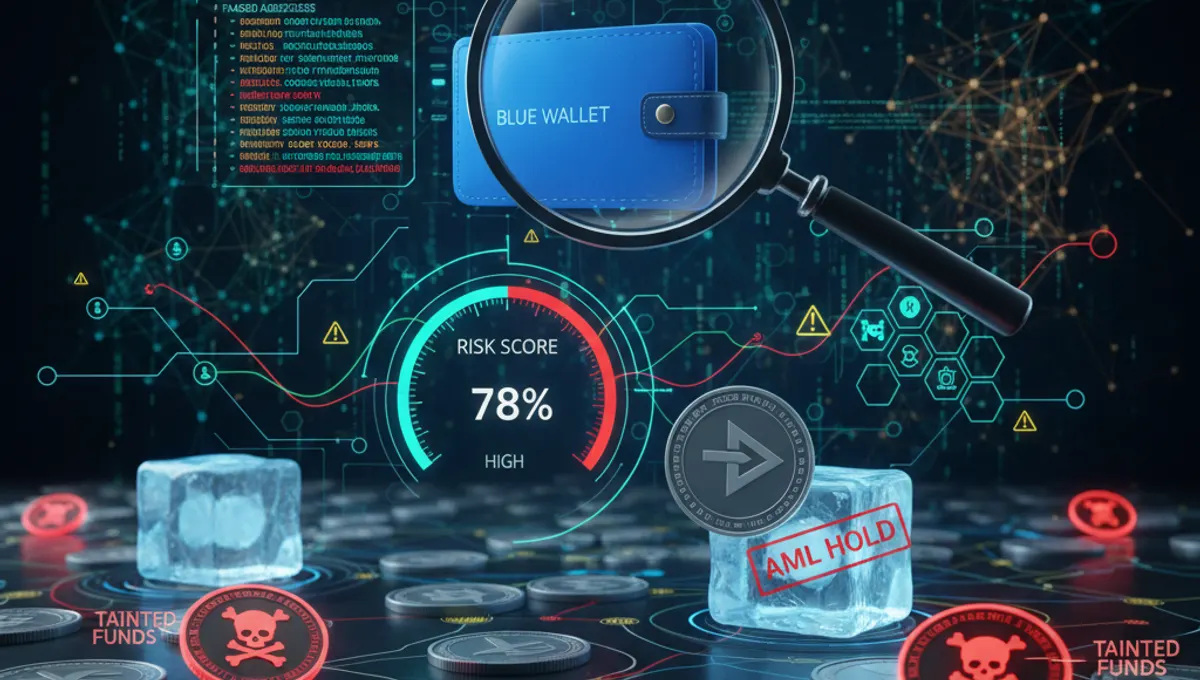
How to Check Blue Wallet Balance and AML Status
Blue Wallet is a mobile Bitcoin and Lightning wallet. To check your Blue Wallet balance:
- Open the app and view your balance on the home screen.
- Tap on a transaction to see details.
- For AML screening, copy your receiving address and paste it into a Bitcoin block explorer or AML service.
- Run an AML check on the address to verify no flagged funds have been received.
Blue Wallet does not perform built-in AML screening, so you must use an external service. This is true for most self-custodial wallets. Always verify the source of incoming Bitcoin before depositing it into an exchange or using it for high-value transactions.
Practical Steps to Avoid Receiving Tainted Coins
Before accepting a large crypto transfer, follow this checklist:
- Ask the sender for their wallet address.
- Run an AML crypto wallet check on their address using a trusted service.
- Review their risk score and any flagged categories.
- If their score is high or they refuse to share their address, decline the transfer.
- For ongoing business relationships, use a service that offers continuous transaction monitoring.
- If you receive flagged coins by mistake, do not move them to an exchange; contact the sender and request a replacement transfer from a clean address.
- Keep records of all AML checks you perform for compliance and dispute resolution.
This approach protects you from frozen accounts, compliance investigations, and the operational headache of dealing with tainted USDT or TRX.
Frequently asked questions
Can I check my crypto wallet balance without revealing my identity?
Yes. Block explorers and AML services do not require login or personal information to check a public wallet address. Your balance and transaction history are visible to anyone with your address. However, if you deposit to an exchange, the exchange will require identity verification under KYC rules.
What happens if I receive USDT from a flagged address?
If you receive USDT from a high-risk address, your exchange account may freeze the deposit, require additional verification, or reject the transaction entirely. Some exchanges automatically quarantine flagged funds. Do not move flagged USDT between wallets; instead, contact the sender and request a replacement from a clean address.
How often should I run an AML check on my wallet?
Run an AML check before receiving large transfers or before depositing to an exchange. If you hold a long-term position and rarely move funds, one check is usually sufficient. For active traders or businesses, consider continuous monitoring through a service that tracks your address in real time.
Is checking crypto wallet balance the same as checking the blockchain?
Yes, essentially. Checking your balance means querying the blockchain via a block explorer. The blockchain is the source of truth for all balances and transactions. A block explorer is simply a user-friendly interface to view blockchain data.
Do all AML services check the same risk factors?
Most AML services screen for mixers, darknet exposure, sanctions, and stolen funds, but their data sources and scoring methods vary. Compare services on our curated AML Services list to understand their coverage and choose one that fits your compliance requirements.