What Is a Crypto Transaction
A crypto transaction is a digitally signed record of value transfer between two blockchain addresses. Unlike traditional bank transfers, crypto transactions are immutable once confirmed by the network—they cannot be reversed or edited. Each transaction contains a unique transaction ID (hash), sender address, recipient address, amount, timestamp, and transaction fees paid to miners or validators. On public blockchains like Tron, Ethereum, and Bitcoin, all transaction details are visible to anyone, making them traceable for compliance purposes. This transparency is why crypto transaction monitoring has become essential for exchanges, custodians, and financial institutions managing regulatory risk.
Why Crypto Transaction Monitoring Matters for Compliance
Crypto transaction monitoring rules require institutions to screen incoming and outgoing transfers against sanctions lists, known darknet addresses, mixer services, and theft databases. A single transaction can expose your business to regulatory penalties if it involves tainted coins—funds stolen from exchanges, ransomware payments, or proceeds from illegal markets. Transaction monitoring jobs in compliance teams focus on flagging high-risk transfers before they settle. By reviewing transaction IDs and tracing fund provenance, you can identify whether coins are clean or dirty before accepting them. This practice protects your exchange account from freezes, your USDT from being blocked, and your business from financial crime liability.
How to Identify a Crypto Transaction ID and Track Its Risk
A crypto transaction ID (also called a hash or txid) is a unique alphanumeric string that identifies a specific transaction on the blockchain. To find it, check your wallet's transaction history or blockchain explorer (e.g., Tronscan for Tron, Etherscan for Ethereum). Once you have the transaction ID, you can look up the transaction details: sender, recipient, amount, timestamp, and confirmation status. For AML purposes, use the transaction ID to trace the fund's journey across addresses and identify any connection to high-risk entities. If a transaction originates from a mixer, gambling platform, or sanctioned wallet, it will be flagged during crypto transaction monitoring. This tracking is the first step in assessing whether incoming USDT or TRX is safe to accept.
Crypto Transaction Fees and Their Role in Risk Assessment
Crypto transaction fees are payments made to miners or validators to prioritize and confirm a transaction. Fee amounts vary by network congestion and transaction size. While fees themselves are not a direct AML risk, unusually high fees or patterns of rapid, high-fee transfers can signal suspicious behavior—such as attempts to move tainted coins quickly before detection. Transaction fee analysis is part of broader crypto transaction monitoring, where compliance teams look for behavioral anomalies. Low-fee transactions on less-monitored chains may also indicate an attempt to evade detection. Understanding fee patterns helps you recognize when a transaction might warrant deeper investigation into its origins and destination.
Risk Score Levels and What They Mean for Your Wallet
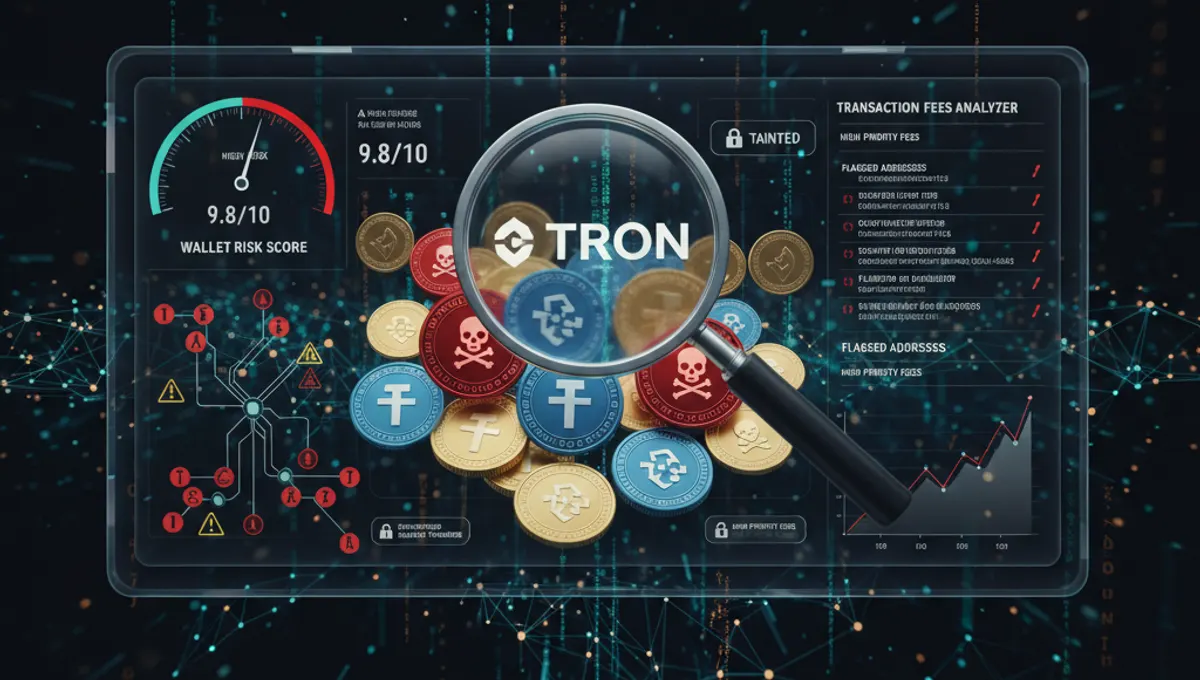
AML screening assigns a risk score to each wallet address based on transaction history, associated entities, and behavioral flags. A clean address (low risk) has no links to mixers, darknet markets, sanctions lists, or theft. A medium-risk address may have received funds from a gambling platform or low-confidence mixer. A high-risk or blocked address is linked to ransomware, stolen funds, sanctioned entities, or active darknet operations. Before accepting USDT or TRX from an external address, check its risk score through an AML service. If the score is high, reject the deposit or escalate to compliance. If it is medium, review the transaction history and source. This tiered approach prevents frozen USDT and exchange account bans while maintaining customer relationships.
Common Risk Flags in Crypto Transaction Monitoring
Crypto transaction monitoring rules flag several high-risk patterns:
- Mixer exposure—funds passing through privacy-mixing services;
- Darknet links—transactions to or from known illegal marketplace addresses;
- Sanctions hits—transfers involving OFAC-listed entities or countries;
- Theft indicators—coins stolen from exchange hacks or user wallets;
- Ransomware payments—funds matching known extortion campaigns;
- Rapid movement—multiple transfers in short timeframes suggesting evasion;
- Gambling platforms—transfers to or from unregulated betting services. Each flag increases the transaction's risk profile. During crypto transaction monitoring, compliance teams investigate flagged transactions to determine whether to accept, reject, or escalate them. Understanding these flags helps you make faster, safer decisions about incoming funds.
How to Check a Wallet Before Accepting Crypto Transfers
Before accepting USDT, TRX, or any cryptocurrency from an external address, follow these steps:
- Obtain the sender's wallet address;
- Use a blockchain explorer or AML screening tool to view the address's transaction history;
- Check the risk score and any associated flags;
- Review recent transactions to identify the source of funds;
- Cross-reference the address against sanctions lists and known darknet databases;
- If the score is low and no flags appear, accept the transfer;
- If the score is medium or high, request additional documentation from the sender or reject the transfer. For institutional use, integrate crypto transaction monitoring tools into your deposit workflow. This practice is standard in compliance and prevents your exchange from holding or freezing tainted coins. Consult the curated list of verified AML services on this site to find trusted screening tools that fit your transaction volume and compliance needs.
Frequently asked questions
What is a crypto transaction ID and how do I find it
A crypto transaction ID (txid or hash) is a unique identifier for a blockchain transaction. Find it in your wallet's transaction history or by searching the sender's address on a blockchain explorer like Tronscan or Etherscan. The ID lets you trace the transaction's path and verify fund origins for AML compliance.
Can I reverse a crypto transaction if it goes to the wrong address
No. Crypto transactions are immutable once confirmed on the blockchain. They cannot be reversed, edited, or recalled. This is why verifying the recipient address before sending is critical. If you send funds to a wrong or malicious address, recovery is extremely difficult and may be impossible.
Why do crypto transactions take time to confirm
Transactions must be validated and added to a block by miners or validators. Confirmation time depends on network congestion and transaction fees. Higher fees typically result in faster confirmation. On Tron, confirmation is usually fast; on Bitcoin, it can take 10–60 minutes or longer during peak periods.
What does it mean if a crypto transaction is flagged during monitoring
A flagged transaction has been linked to high-risk activity such as mixer exposure, darknet connections, sanctions violations, or theft. Compliance teams investigate flagged transactions to determine if they should be accepted, rejected, or escalated. Receiving flagged coins can result in frozen USDT or exchange account restrictions.
How do I know if coins I received are tainted or dirty
Check the sender's wallet address using an AML screening tool. If the address has a high risk score or flags for mixer exposure, darknet links, or theft, the coins are considered tainted. Before accepting large transfers, always screen the source address to avoid compliance violations and frozen deposits.